The 12 Books of Christmas: 2025 Edition
The twelve books I read this year that I especially loved
Introduction
Every year, I try to do something related to the 12 Days of Christmas. Last year, I began doing it for books that I read last year, and the result was a thread that I posted on Bluesky during the respective period.
In amongst those twelve books were modern classics, postmodern masterpieces, and fascinating non-fiction. I’m quite broad in what I read, if only because I only started reading books again just a few years ago after spending about a decade post-high-school not reading. As such, I’ll read whatever I find, and hopefully I enjoy it, just as I enjoyed these following titles.
This page will be a living document during the 12 Days of Christmas, from the 25th of December to the 6th of January; each day I will add a book and give a brief review of it. There won’t be a detailed word-by-word analysis of these texts or anything, but I hope that anything I write here gives you the impetus to check them out.
Day 1
Don Quixote by Miguel de Cervantes Saavedra
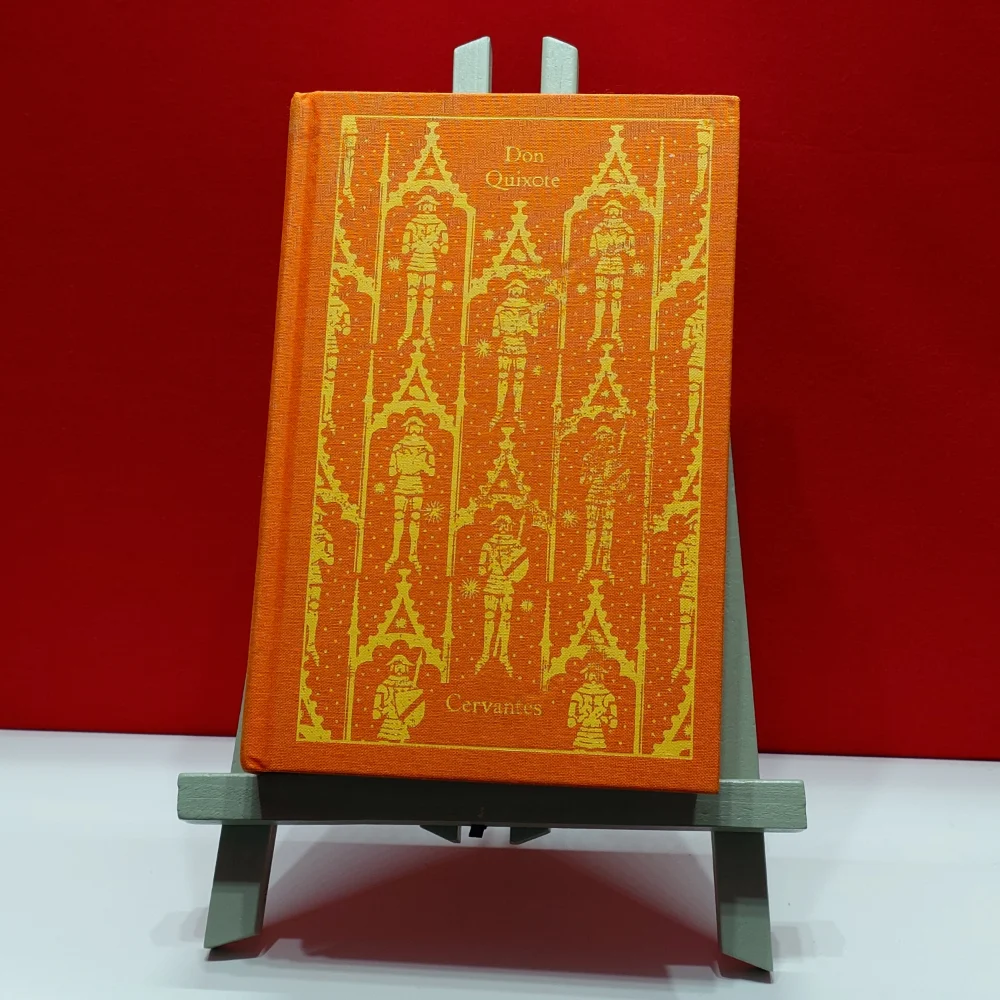
Miguel de Cervantes Saavedra lived a rather chaotic life. He was a soldier who suffered injuries to his chest and lost the use of his left arm in battle, eventually being captured by pirates before returning to Spain; he went on to work other jobs, including a brief spell as a tax collector, later seeing him briefly imprisoned for accounting irregularities.
It might seem strange, therefore, that a man like this could become the single most influential writer in the Spanish language. Indeed, he didn’t earn much money from his writings in his day, and he only wrote alongside the other jobs he took on over the years, and this is in spite of writing the most famous example of classical Spanish literature.
The book revolves around the titular knight errant Don Quixote de la Mancha — a ragged, deranged middle-aged man with a fondness for tales of derring-do — on a personal quest for chivalrous glory in company with farmer-turned-squire Sancho Panza. On their journeys across Spain, Don Quixote’s unwavering bravery sees the pair end up in awkward situations, whilst Sancho’s wit and charisma come in handy to amuse friends and diffuse situations that Don Quixote put them in.
The version of the book I read is John Rutherford’s translation from 2000 (albeit in its more modern Penguin Clothbound form), and Rutherford goes to some lengths to stress the reason for this particular translation in his introduction to the book: Don Quixote is intended to be a humorous book, and many of the prior translations fail to really work on the humour side of things, whereas Rutherford’s translation puts that towards the forefront. That said, there are so many translations of this book that you’ll be able to experience this book in whichever way you want, such as with Edith Grossman’s highly-lauded translation.
The humour really does land very well here, with the characters’ quirks and antics helping to provide a great deal of levity whilst also making sure the reader is aware that what’s going on is simultaneously in Don Quixote’s head, as well as in the world the book takes place. It’s also a very smartly written book, being written as though it was already a translation of Arabic texts that detail a Moorish account of the knight errant’s life events, which lends the book an air of authenticity.
Cervantes takes pains to use this book as a mirror to reflect to its audience the problems with Spain’s fetishistic adoration of the concept of chivalry, which made the Iberian Peninsula one of the most blood-soaked regions of Europe through the Middle Ages. Don Quixote serves as both a cautionary tale of where violent ideals can go if left unchecked, and also a way to satirise contemporary chivalrous writings.
Cervantes also excellently weaves into his narrative Avellaneda’s spurious ‘Part Two’ — a famously bad sequel that Cervantes had nothing to do with — that released whilst Cervantes was writing his own Part Two (included in this volume), and manages to write not only a very amusing ways of telling his story whilst using Avellaneda’s work as a way to not just criticise his writing, but to give the characters something else to bounce off of.
To summarise: there’s a reason this 400-plus-year-old tale has lived on as long as it has. Its excellent use of metanarrative, its humour, and its (scholarly questioned) reputation for having brought the bloody chapter of Spanish chivalry to an end, all help cement Don Quixote as a legendary book. Cervantes may not have made much from his writings in his day, but they offer more than anything mere money can provide.
Day 2
‘As I Lay Dying’ by William Faulkner

American literature can have a bit of a weird reputation here in the UK. When I was in high school, I was given Of Mice and Men by John Steinbeck, a book that — if you’ve read it in class as a child — usually invokes a particular emotional response: trauma brought on by the end of the book. Often that trauma is laughed at as a sort of coping mechanism, but ultimately, it’s one of the few American works (alongside Grapes of Wrath, also by Steinbeck) that students may have covered at some point in school here.
One author that I didn’t really know much about until the last couple years is William Faulkner. A man who spent much of his life in or near Mississippi, he grew fairly early in life into writing, amassing a career’s worth of text across a few decades consisting of 19 novels, scores of short stories, numerous motion picture screenplays, among a panoply of other writings. Among this body of work, I have so far only read two of his books of the four I currently own, the first being The Sound and the Fury (a book that’s tricky to recommend as an entry point to Faulkner but is still a fascinatingly constructed tale), and the one I want to talk about here: As I Lay Dying.
As I Lay Dying follows the Bundren family undertaking a journey: sending the mother of the family Addie Bundren to her final resting place in her hometown of Jefferson. However, the easy way to get to Jefferson gets destroyed following an episode of torrential rain on the night of Addie’s death. What follows is a voyage akin to a Southern Gothic take on ’the Odyssey’, in which the remaining members of the family overcome difficulty and distress, all to satisfy Addie’s dying wish.
There’s a tension with how the book is written; it depicts the events in the story with a kind of energy that makes everything feel incredibly stressful. The Bundren family has to deal with things like injuries, running repairs, and sourcing tools to accomplish the job of getting Addie to Jefferson. It’s such an engaging story.
The different members of the Bundren family all have their different traits to make them come alive through the text. From the stubborn-as-a-mule father Anse, to the children Cash, Dewey Dell, Jewel, and Darl, they all have personalities that make them memorable and fascinating as individuals. Cash’s propensity to rush head-first into things, Darl progressively finding the journey harder and harder to cope with, and Dewey Dell’s naive curiosity greatly expand the depth of the novel.
The different characters’ interactions are also showcased by way of Faulkner’s trademark ‘stream of consciousness’ style — one he pioneered in The Sound and the Fury and arguably perfected here in As I Lay Dying — where the narrative is presented by a particular character for each chapter, creating a winding tapestry of events from multiple perspectives and conflicting accounts.
All in all, it’s a great book, and it’s one that may require a few more reads to truly piece together the work in totality. It is a circuitous, brutal gauntlet, bringing together a family whose members are disparate yet inseparable, and it is one to savour.
Day 3
README.txt by Chelsea Manning
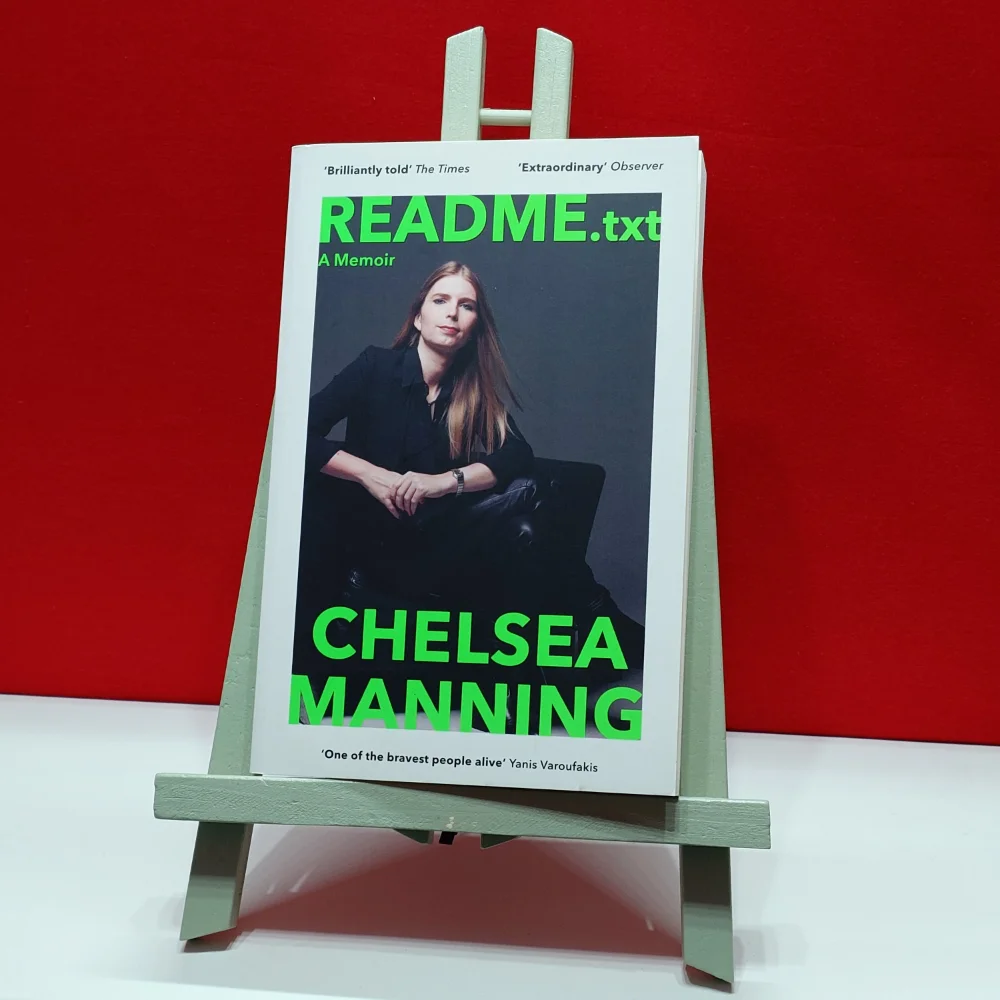
In 2010, a substantial number of documents was published online via WikiLeaks, a portal that permits the leaking of classified information and whistleblowing. The documents leaked concerning the Iraq War and Afghan War gave the world a window into one of the most damning episodes in modern American military affairs, with the documents detailing the extent of the civilian casualties and abuses in both conflicts, among numerous other monstrous things that happened as a consequence of western involvement in both wars. It held a torch to what was really going on, and it consequently saw the United States Government getting very hot under the collar.
Among an Army detachment to FOB Hammer near Baghdad was an intelligence analyst who had difficulties in fitting in with the Army lifestyle, despite being dedicated to the job. Not helping things was being exposed to so much heinous information that people really needed to see to believe. After a few months of deployment, inamongst which were numerous conflicts with superiors, they were arrested and charged with violations of the Espionage Act, resulting in a 35-year prison sentence and dishonourable discharge, among other penalties.
Fast-forward to 2017, however, and Chelsea Manning (as she would now openly identify herself) would be released from prison following a commutation of her prison sentence at the hand of outgoing-President Barack Obama. After years of torture, dehumanisation, abuse and trials put before her during her time in confinement, she was finally able to walk free, and a few years after that, she wrote a book detailing her story, growing up a boy who wasn’t sure about himself before coming to terms with and able to present her eventual identity.
README.txt opens up with the upload of the aforementioned document leak; not before long does it bring us back to an earlier time to Chelsea’s childhood, from which point it details her troubled upbringing which involved serious familial problems and childhood bullying, a period of homelessness, an unstable day-to-day existence, and finally finding something she could look forward to: a career in the United States military.
I must confess something real quick: I wasn’t fully aware of the whole WikiLeaks episode as it happened, largely because I was an ignorant 15-year-old boy more concerned about my maths classes and playing Call of Duty than engaging in geopolitics. However, this book has given me a quick and simple yet no less sobering breakdown of what it was Chelsea Manning had seen during her time as an intelligence analyst, an atrocity exhibition that she felt entirely justified in putting out there for the public to see.
On top of her leaking of infomation, however, this book details Chelsea’s identity struggles over the years. Living as an openly gay man prior to joining the military, she felt the brunt of the Clinton-era ‘Don’t Ask, Don’t Tell’ laws, effectively silencing LGBT servicepeople and requiring them to remain in the closet. It undoubtedly left a mark on Chelsea, and she recounts the raw, visceral misery she experienced in not being able to seek help for the very real fear of being found out, ostracised, or worse.
README.txt is also able to showcase Chelsea’s personality in the manner in which she writes. Her sense of humour is very much that of someone who has spent practically her entire life online, but rather than overloading the book with memes and in-jokes, any references to internet culture are used specifically, and there’s also a kind of dark humour and irony to a lot of what is put to paper here.
But don’t let the humour fool you: this is a serious book about a horrific period in modern history that split the world down the middle on whether Chelsea’s actions were valid. It led to a chilling effect, such as WikiLeaks founder Julian Assange being indicted years later on top of his period of political asylum. Her experiences in prison as written here are grim and inhumane, and — although I am a straight, cisgender male and not someone who falls under the LGBT banner — the manner in which Manning recounts her problems with identity and sexuality are anxiety-inducing and honestly terrifying to consider.
In all, README.txt gave me an opportunity to not just know of Chelsea Manning, but feel a bit closer to knowing her. Regardless of your stance on whether or not she was in the right to leak what she had, this is a book written with the clarity and maturity that can only be earned through time and good, hard, honest self-reflection.
Day 4
The Cyberiad by Stanisław Lem
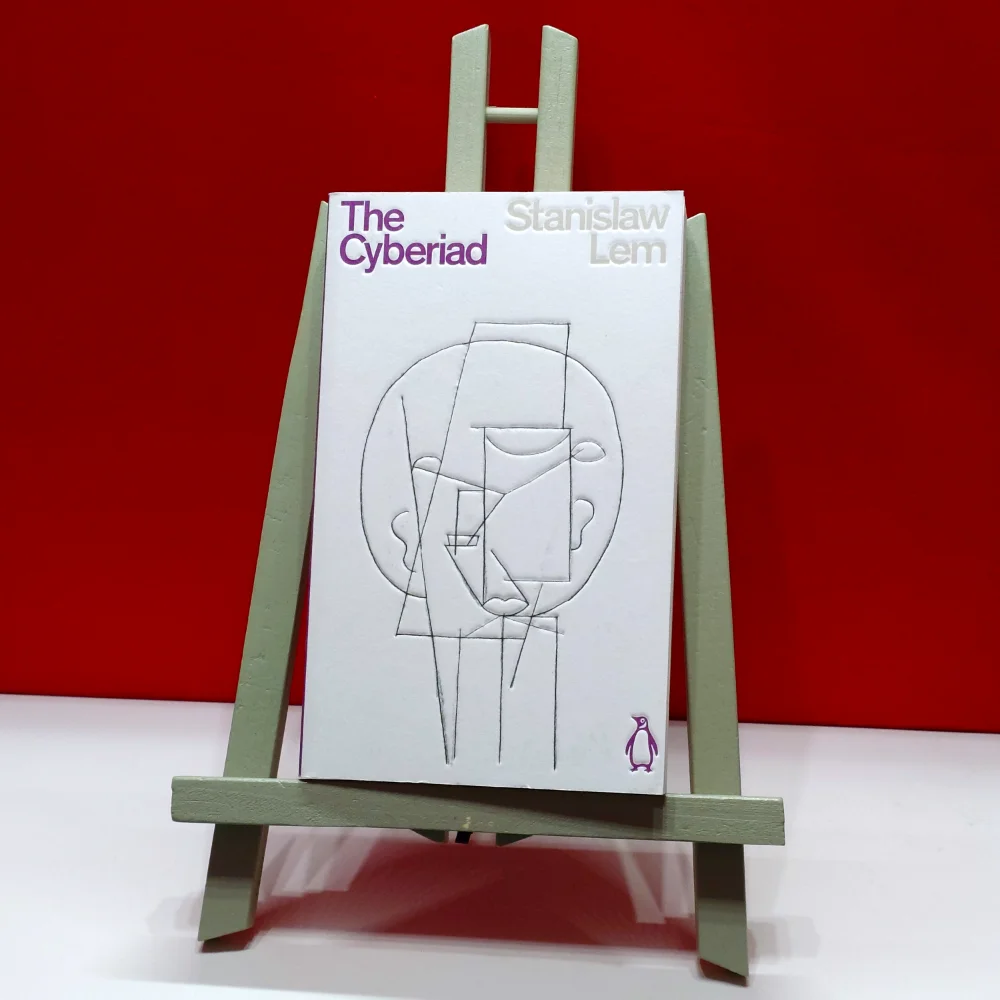
Stanisław Lem was a Polish author whose work was generally concerned with the genre of science fiction. He was a highly influential force in the genre, with his 1961 novel Solaris being among his most popular works. Its winding narrative and psychological approach to written sci-fi saw it influence a great deal of things, including a 1972 Andrei Tarkovsky-directed film adaptation which amped up the surrealism. Just a shame it took as long as it did to get an actual good English translation…
That said, Lem wasn’t just an author of hard sci-fi. He had a lighter side, one that was able to give the world of science fiction a bit of levity. In 1965, he wrote a loosely-connected series of short stories called The Cyberiad. It chiefly follows two robotic “constructors” (or inventors, if you will) called Trurl and Klapaucius, often needling and bouncing off one another yet both equally capable of designing and contriving extraordinary machines.
The way in which the book is presented is mainly as a series of sallies, each one starting under a variety of circumstances, before eventually unravelling to show our constructors coming up with ingenious solutions to problems. Sometimes, however, those solutions sometimes introduce problems of their own.
The English translation of the book was handled by Michael Kandel, and it came with an interesting challenge: Lem employed a lot of neologisms and made-up words, most of which wouldn’t be translatable to English as is. As such, Kandel came up with English neologisms instead. Consequently, with the effort put in to make the translation as good as it can be, The Cyberiad is one of the funniest books that I have ever read.
Lem’s wordplay and humour works superbly, and the moments where Lem takes a moment to take a slight philosophical angle on things — as you might expect, if you’ve read Solaris — can still serve as the setup for some moments of serious hilarity.
The book also features illustrations by artist Daniel Mróz, whose dynamic black-and-white drawings capture the absurdity of the book so well. The illustrations pop, with just enough detail to get by and not too much more, and capture the story’s surreal situations in a way that would undoubtedly weaken the book overall if they weren’t present; quite apart from being uniquely bizarre, the illustrations also serve as a somewhat helpful visual reference for how Trurl and Klapaucius look, along with their inventions and the challenges they’re designed to tackle.
For the 60th anniversary of the publication of Stanisław Lem’s debut novel The Astronauts, Google presented an interactive Doodle featuring scenarios from The Cyberiad, complete with Mróz-style illustrations. It’s a fun little diversion, but also goes to show just how iconic the art is, and how entertaining its stories were. It’s a bit strange that they use a different book’s scenarios to celebrate another’s, but it’s hard to not recognise The Cyberiad for how influential it is. I would not be surprised if this book inspired Douglas Adams to write The Hitchhiker’s Guide to the Galaxy (although to my knowledge, he never said as much).
It’s hard for me to properly review this book, but what I can do is recommend this book if you want some incredibly hilarious science fiction from one of the genre’s luminaries. It’s also a book that serves as a brilliant warning to not ask a machine to create nothing.
Day 5
The City & the City by China Miéville
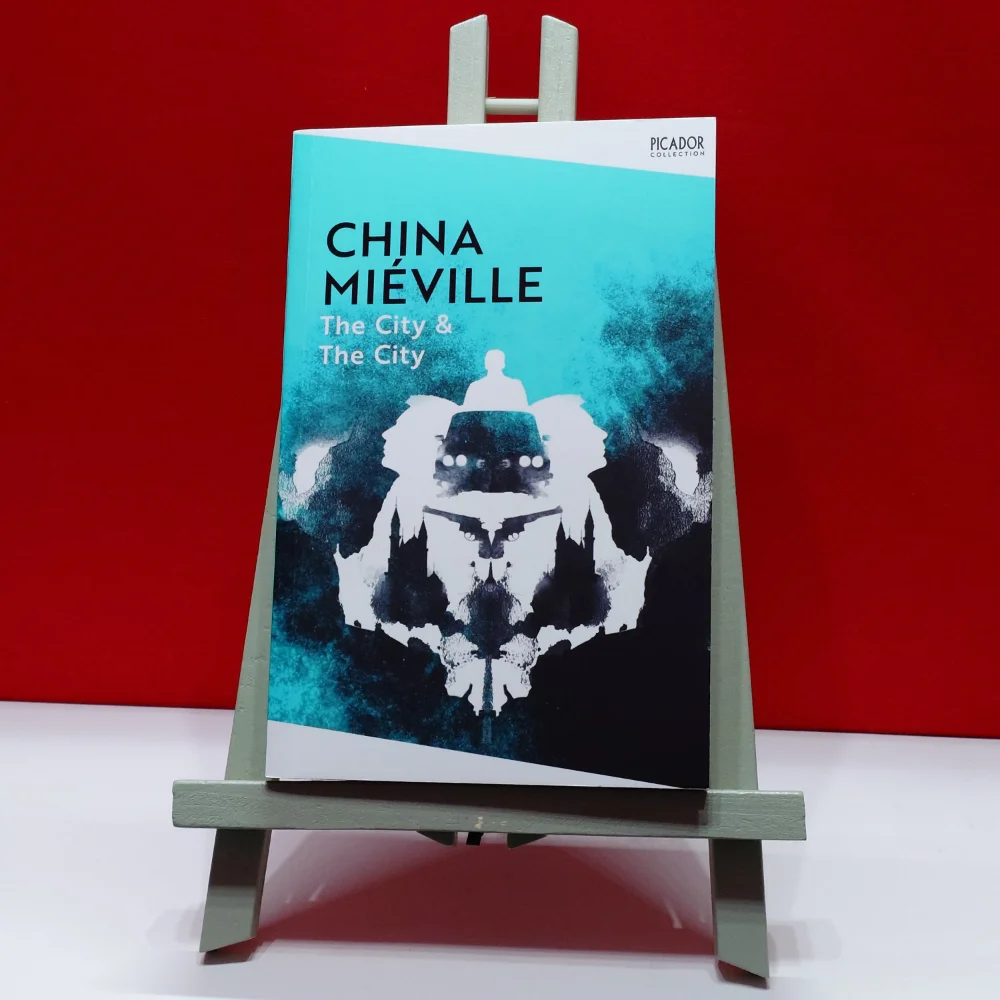
A couple years ago, I read The Creative Gene by Hideo Kojima. It’s a book that serves as a collection of essays that focus on the many different kinds of media that influenced his work over the years. One half of the book is itself dedicated to the books that influenced him, including such works as Ryū Murakami’s Coin Locker Babies, Salem’s Lot by Stephen King, and the book I’m going to talk about now: The City & the City by China Miéville.
Miéville cut his teeth as a novelist with the publication of King Rat in 1998, and following later novels, he has become a pioneer of the literary genre known as ’new weird’. It’s hard to really define what ’new weird’ is, simply because none of the books have any particular elements — thematic, narrative or otherwise — that link the different works together; about the closest description I can offer is a mixture of traditional folklore and fantasy in a comparatively modern setting, sometimes seasoned with a healthy sprinkling of horror. This doesn’t apply to all works in the genre, but based on what I’ve read so far, that seems consistent enough.
In 2009, Miéville would write The City & the City, which went in a different direction compared to some of his older works. It’s a detective novel in which Inspector Tyador Borlú is tasked with an inexplicable crime: a woman is murdered, but her face is mangled and her identity is unclear. The only option Borlú has is to investigate across not just his home city of Besźel, but also the other city Ul Qoma. These two cities are in the same place “grosstopically”, but to be in one city and notice something from the other — breaching — is a crime of the utmost severity.
One of the biggest strengths of this book is its world-building; Miéville’s background in anthropology really shows through the intricacy with which he crafts his setting. Everything from the language spoken and written by citizens, to the architectural styles used by the cities’ buildings, shows a richness that you seldom see in all that many other works.
The mind-bending nature of the mystery which serves as the centrepiece for this book is strong enough to keep you guessing with what might come next. It’s a fascinating story that keeps the reader engaged with a drip-feed of scenarios that not only help to build the world, but also gets the reader to wonder what’ll happen without being predictable.
There are times where the book might feel a smidge difficult to follow — on account of certain terminology being used, as well as wrapping your head around the idea of two very different cities being in the same place — but The City & the City does very well to keep things consistent. It doesn’t sprawl with unnecessary details; anything that is mentioned is more often than not essential to the story and the mechanics by which it progresses. Above anything else, it’s a book that respects the reader’s intelligence.
In summary, The City & the City earned its many awards upon its publication. It’s a brilliantly-paced detective story wrapped within a world that’s simultaneously inexplicable yet vividly real. Now I just need to check out Miéville’s other work when I get the chance…
Day 6
A Confederacy of Dunces by John Kennedy Toole
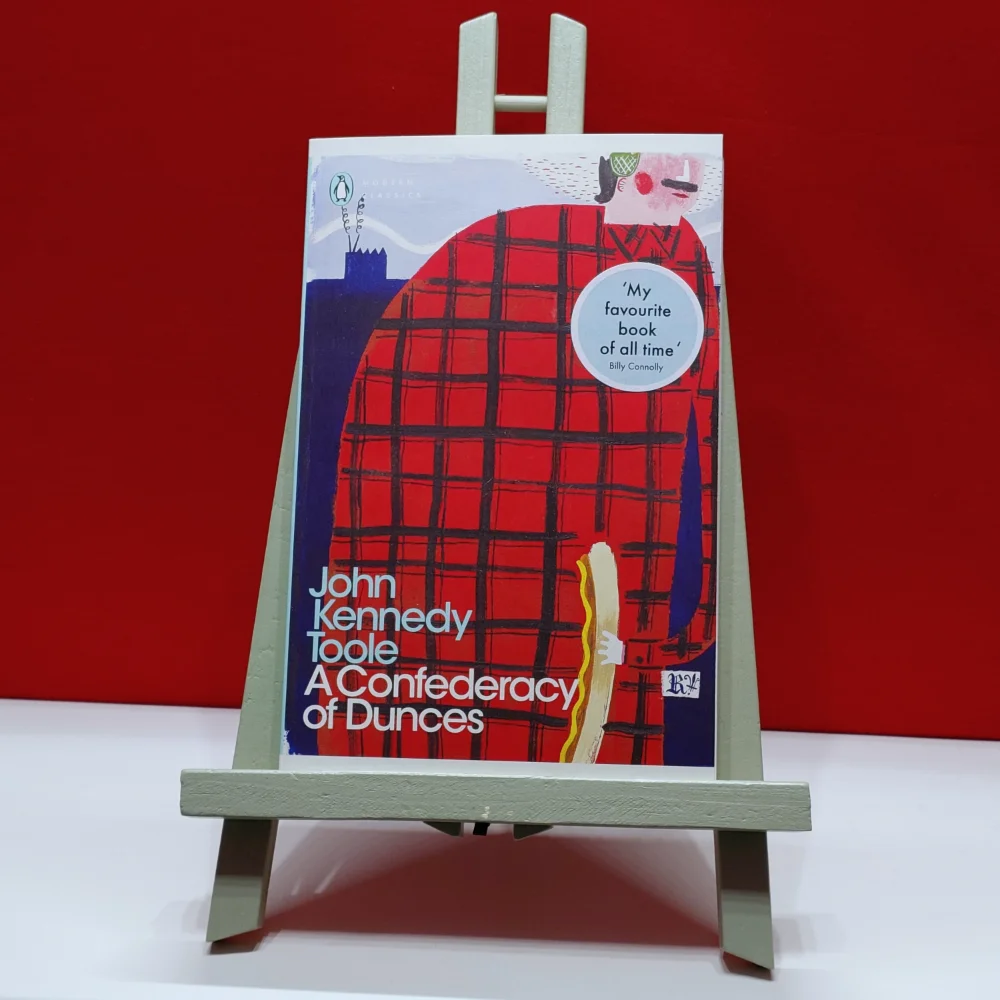
During his time in military service, John Kennedy Toole started writing a book, one that he would continue writing following a hardship discharge, subsequent return home, and working a teaching job. Despite some considerable stumbling blocks in his time writing it, he finished the manuscript in 1964, sending it to Simon & Schuster with the hopes of seeing it published.
Robert Gottlieb, the senior editor responsible for seeing the ultimate gestation of Joseph Heller’s Catch-22, was pretty receptive to the book, but wasn’t fully content with the book in its original form. Following an extensive back-and-forth between Toole and Gottlieb, it became clear that Toole refused to give way on his vision of the book, and Gottlieb — appreciative of Toole’s abilities as a writer — wanted Toole to adjust his work and resubmit it. In the end, Toole got his manuscript back, unpublished. He fell into despair, one that would see him take his own life at the young age of 31.
It fell to his mother Thelma to see Toole’s opus to publication. She contacted Walker Percy, himself an author but also an instructor at Loyola University New Orleans. Despite initial resistance, Percy agreed to read the work, only to find himself loving it. It would still take a while for the book to finally see publication, but via the Louisiana State University Press, the world would finally get to experience one of the best examples of Southern literature: A Confederacy of Dunces.
Ignatius J. Reilly is a corpulent, angry slob. A walking contradiction, he loathes the modern world yet relishes its conveniences. He expresses open disdain towards scenes in the movies he watches at the cinema, yet he can’t stop watching them. He writes correspondence of intense political and philosophical disagreement to a female collegemate that he can’t seem to keep out of his mind. He has never been able to hold a job down, and he needs to raise $1,020 to cover the compensation cost of a car crash his drunk mother caused.
What follows is a surreal, hilarious adventure which sees Ignatius effectively forced into employment. His hypocritical traits give him licence to take charge and assume positions of leadership he doesn’t have, whilst simultaneously rejecting any responsibility for anything that goes wrong…which is what invariably happens, although the manners in which things indeed go wrong keeps you laughing.
A Confederacy of Dunces is set in New Orleans, which it paints a vivid picture of, mapping the city out and giving the reader an idea of what the place is like, along with its people. It’s helpful for me, because I’ve never been there, but I do know it to be one of the most diverse cities in the US, and reading this book, it’s evident that Toole has a lot of love for the place.
The book’s humour, as well, is really funny. It’s definitely very crude, and will not be to everyone’s taste as a result, but I don’t mind a bit of crass humour now and again, and this has plenty of it. It’s capable of making the many different situations in the book feel like the sorts of things that could happen in real life, despite how outlandish they might well seem at first, and the ways in which the different characters contrast against one another — some even serving as opposites in places — not only makes them more interesting, but also gives the book more avenues to throw some jokes in at their expense.
John Kennedy Toole never got to see his work published. He never got to see it win a Pulitzer Prize, the third Prize for Fiction to be awarded posthumously. He never got to see it held aloft as a great example of Southern American literature. In many ways, A Confederacy of Dunces is not just a comedy, but a tragedy — less for the content of the book, in the latter case, but more because it was apparent there was so much more in the tank.
Day 7
Tinker Tailor Soldier Spy by John le Carré
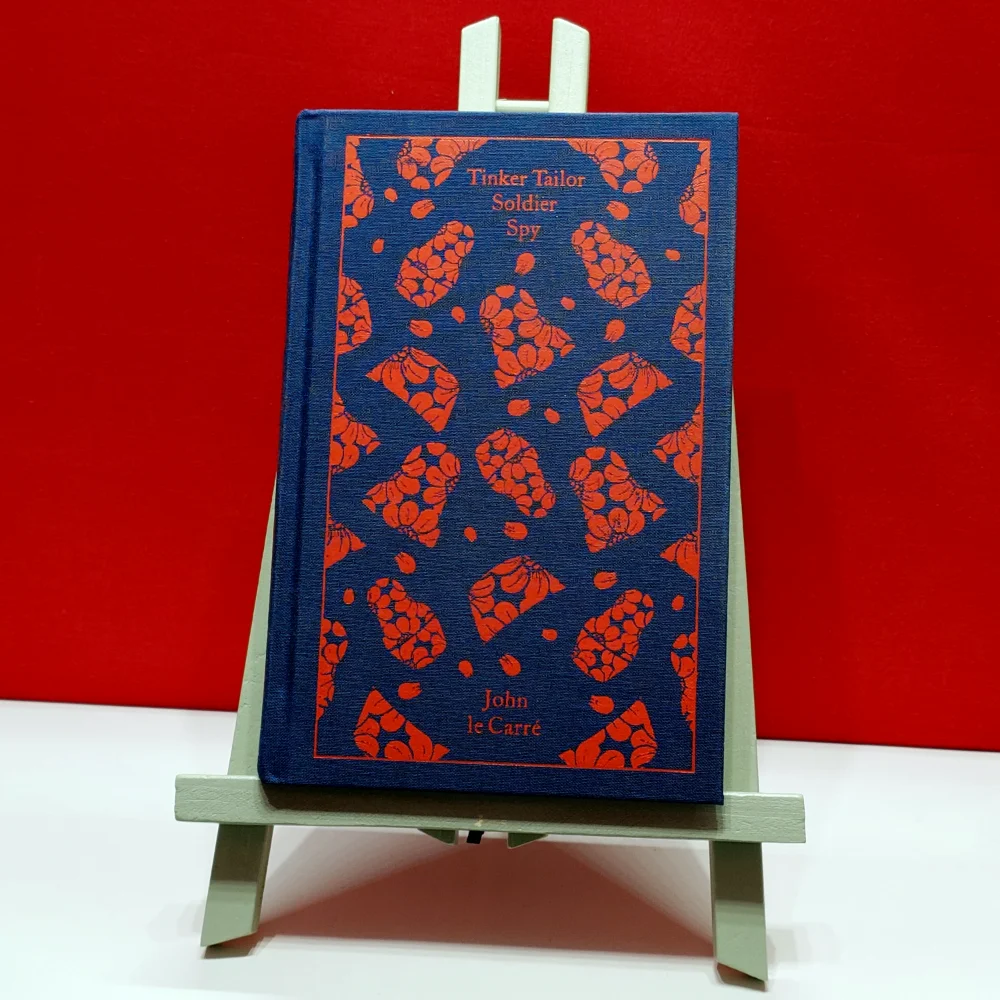
David Cornwell was a spy who worked as an officer for MI5, and eventually in MI6, working out of West Germany for a few years. He would retire not too long after, however, on account of the uncovering of one of his associates being a double agent to Soviet Russia. Prior to that, during his tenure in Hamburg, he wrote novels that would see considerable success, although he would have to assume a nom-de-plume. And even though he retired from espionage, he could — and did — continue writing. With this in mind, let me introduce you to Tinker Tailor Soldier Spy by David Cornwell, better known by his pen name John le Carré.
Gordon Smiley is a rather dreary chap. He’s aging, overweight, balding, and rather permissive when it comes to being pushed around. On the flipside, he is markedly intelligent, can use being pushed around to his advantage, and isn’t afraid to get his hands dirty. But at the start of this book, he’s basically retired; Operation Testify was a complete failure which saw a fellow spy captured and tortured, and he and his allies were forced to disband the Circus.
That is, until it turns out there may have been a mole in the group. Smiley is convinced to talk to someone accused of defecting to the Soviet Union, by which point Smiley and his former associates start to regroup and uncover not just who that mole is, but also to whom specifically they are passing off information.
It should be noted here that whilst le Carré got into writing novels during his time as a spy, another British author — this time with a background as in Naval Intelligence (now you know where Goldeneye came from) — was himself writing novels in what is now possibly the most well-known espionage literature franchise. Despite its rampant popularity, however, le Carré was hugely critical of Ian Fleming’s James Bond series; he saw Bond as a thug rather than a spy, and consistently believed that Fleming’s novels were not proper espionage.
By stark contrast to Fleming’s output (and the cinematic franchise that emerged from it), John le Carré’s work couldn’t feel any more sedate. It’s trivial to imagine someone reading Tinker Tailor Soldier Spy especially, expecting a James Bond novel, and end up dropping it because the espionage in this book is, truth be told, actually kind of boring.
It is because of the above, however, that this book works as well as it does. It’s not by any means a thriller, but it’s not a trudge; things are happening, and you’re expected to keep up with it, even if it’s not a high-speed, high-octane drama. The focus isn’t on action or anything like that, but on the cold hard realities of the occupation of espionage, and on the hunt for the mole.
It also has a rather dry sense of humour about it. It’s a very serious book, but with occasional hints of levity to help ensure that the serious tone doesn’t overwhelm, and instead gets accentuated, a little bit like adding salt to enhance a dish’s flavour.
Tinker Tailor Soldier Spy is the first book in a trilogy nestled within le Carré’s literary universe, and I’m very interested in checking out his other works. It’s a book written by a man who knows what he’s talking about and can call upon lived experiences to deliver a believable, engrossing spy classic. Also, Lexham Gardens is pretty lovely.
Day 8
Life Ceremony by Sayaka Murata
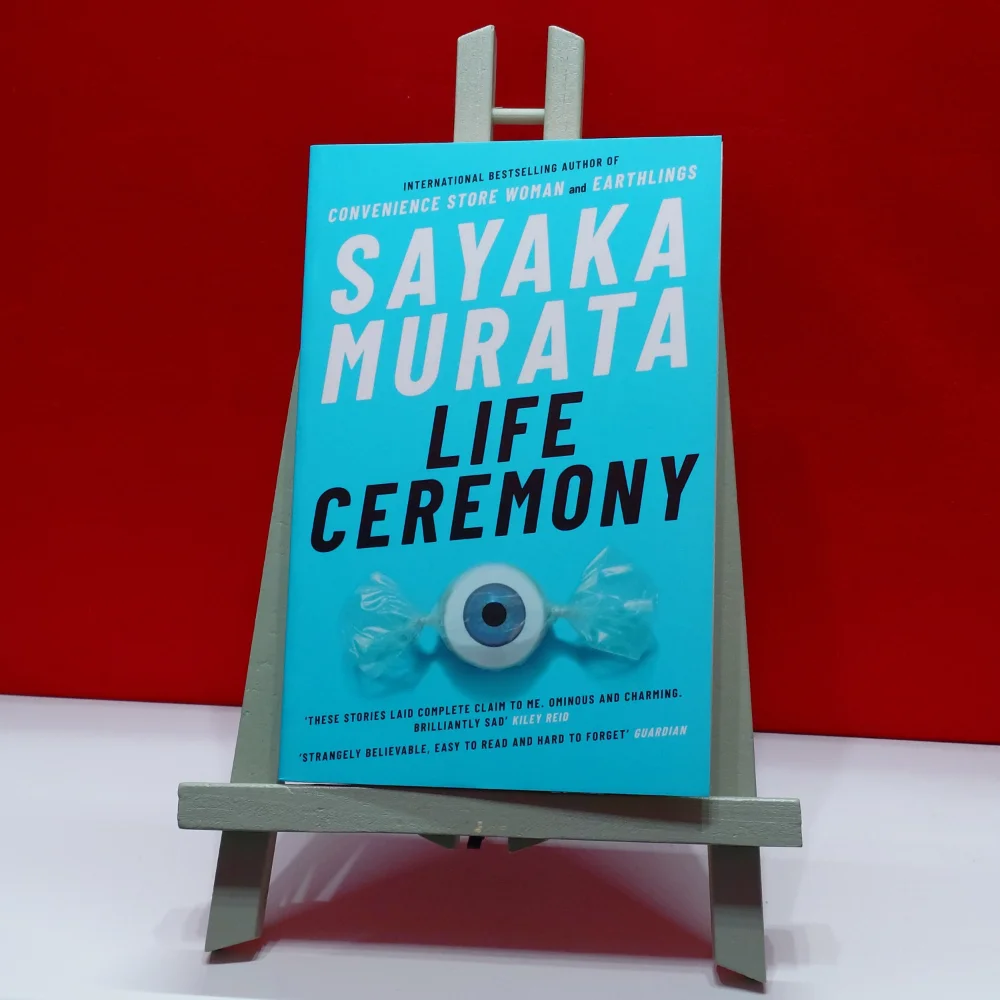
One author I’ve become something of a fan of over the years is Sayaka Murata. Her works are generally shorter, making them relatively easy to digest. Convenience Store Woman is a book I especially love; it’s a story that draws on Murata’s own experiences and serves to ask questions about living within a comfortable routine despite external pressures.
One of the reasons I particularly enjoy Murata’s work is because of her willingness to entertain what we perceive as taboos and presents them as being relatively normal occurrences in her literary world. With this in mind, I want to talk about a collection of thirteen short stories of varying length and subject matter: Life Ceremony.
The advisory features earlier for this particular entry, because it’s hard to talk about this book and its stories without making sure everyone is on the same page with the content of this book. This is a book intended to entertain, but also to disgust, and to get the reader to consider a reversal of roles and circumstances.
The body horror aspect takes flight early on in ‘A First-Rate Material’, in which we have a window into a world where people can buy things like clothing, jewellery and furnishings, where humans are “the material” in question. Within the story is a discussion on the moralities of this practice. The body horror aspect features in other stories such as ‘Puzzle’, where a woman feels detached from humanity and the humans around her, seeing them as basically being fleshy containers reduced to their biological processes.
The body horror aspect is at is most visceral in ‘Life Ceremony’, the short story that lends the book its name. It portrays a world in which funerals are conducted less like a sad procession, and more like a chance to give rise to new life. In other words: the body of the deceased is prepared beforehand to be cooked and eaten as part of a large meal spread, after which it is customary to find a partner to have sex, with the specific intent of procreation.
There are stories here that don’t delve into body horror, however. There are a few stories here that complement another, with the stories ‘A Summer Night’s Kiss’ and ‘Two’s Family’ showcase two elderly women but in very different circumstances in each story. ‘Lover on the Breeze’ is also a rather quirky entry, discussing the romantic dynamics between a young boy, a young girl, and a curtain nicknamed Puff.
Mullings on food are present, with ‘A Magnificent Spread’ showcasing fascinating divides in appetites and tastes, even within the same family. ‘Eating the City’ is also a fascinating look into the idea of urban foraging, seeking alternative means of nutrition compared to simply going to a supermarket and buying a bunch of veg and protein.
This is by no means a complete list of the stories in this book; instead, these are just tasters of what you can expect if you decide to read Life Ceremony. It gets gross at points, but it’s done in a way that’s purposeful rather than gratuitous. Sayaka Murata’s purpose here was to make you consider the cultural norms we spend our waking existences abiding by, and wondering why that is.
Not everyone is going to find a gold mine in every one of these stories, as a couple of them are either too short for that or feel almost like simple diversions. As a complete package, however, Life Ceremony is a curiously entertaining book, and one that gives you an idea of what Murata is about as a person and as a writer.
Day 9
The Doctor Who Fooled the World by Brian Deer
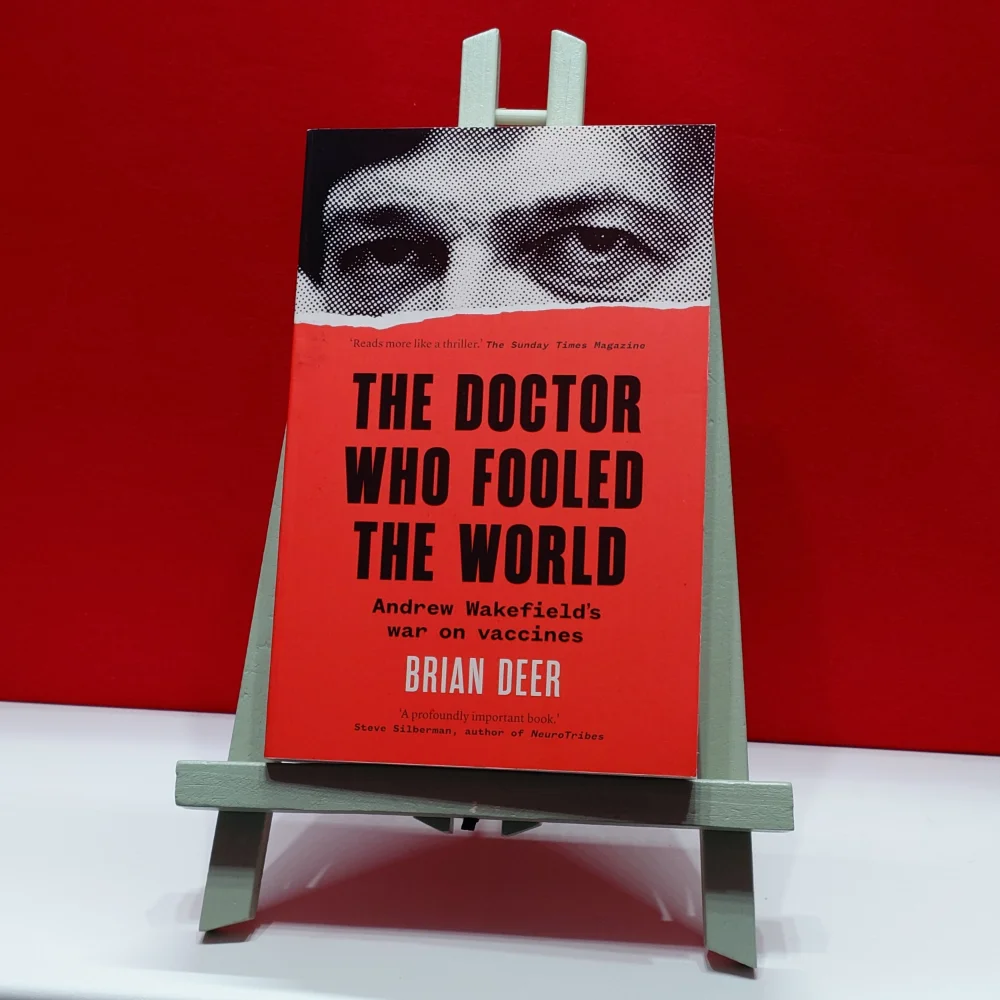
In 1998, Andrew Wakefield — a gut specialist at the Royal Free Hospital in London — was the head author of an ’early report’ in the medical journal The Lancet, in which he and his fellow researchers claimed to have discovered a rather terrifying possibility: the MMR (measles, mumps and rubella) vaccine, administered to young children in the UK, might be responsible for a disease in the gut that results in the child developing autism.
The knock-on effect, drummed up by Wakefield himself and the media at large, saw uptake of the MMR vaccine decline sharply, in turn resulting in an increase in cases of measles especially. To this day, a number of people are fiercely hesitant towards vaccines, and recent years have seen a drop in inoculation rates in industrialised nations, the UK seeing the sharpest fall.
However, starting in 2004, The Sunday Times would begin publishing a series of articles which criticised the findings of the ’early report’, its methodology and the individuals behind it. The author of these articles, Brian Deer, specialised in investigating the pharmaceutical industry and medicine at large, and what he had uncovered was a tangled web that bared, for all to see, the sophisticated fraud that the whole affair turned out to be.
In The Doctor Who Fooled the World, Brian Deer recounts the early days of Andrew Wakefield, his education, and his eventual path into medicine. It then moves onto the publication of the ’early report’ and the problems that saw it condemned, before closing up on life for Wakefield after his being struck off the medical register.
This book was published in 2020, in the midst of the coronavirus pandemic. It’s important to stress this, as at the time, there was rampant vaccine hesitancy towards the upcoming COVID vaccines, misinformation of which was spread across social media, in turn encouraging people to risk their lives under a warped sense of individual liberty. This book isn’t about the COVID vaccines specifically, but it does illuminate where exactly we’ve gone wrong in terms of science education to allow such vaccine hesitancy to run amok.
The MMR vaccine scare is one of the worst episodes of medical malpractice in living memory for numerous reasons, chief among which was how idiotically unfounded it was. The ’early report’ was a load of hogwash — leading to an eventual retraction by The Lancet (though far too late to actually matter) — and The Doctor Who Fooled the World chronicles the downfall of the report and its lead author, uncovering the mistreatment of children, exposing the contradictions inherent in the research, stressing how pathetically uninformed Wakefield was on the subject of autism, and making it clear for all to see the extent to which the MMR scare set back a concerted effort to get people inoculated.
I’ve seen some people criticise this book for only providing Deer’s side of the story and not Wakefield’s. This completely ignores that he was correctly struck off the medical register after urging caution towards the MMR polyvalent and instead encouraging an expensive measles monovalent that was being made by a company he was the director of, and for both refusing to and failing to carry out his duties as a doctor.
Brian Deer caught a massive amount of flak from Wakefield’s supporters and allies in the twenty-some years since he began his investigations. If there’s one thing this book proves, however, it’s that investigative journalists don’t stop at “no”. Deer’s dry wit helps to lighten things in places, but the tone of the book remains one of concern and disgust, all the while Deer keeps his head up high and plunges into the murky depths of a massive medical fraud.
As someone who has autism, it also demonstrates the degree to which autism has basically been vilified as this damnable affliction that is worse than measles. Autism itself might affect a person’s quality of life, but autism doesn’t kill you, at least on its own. Measles can, quite easily.
I realise this entry has been less about this book and more about my seething disdain towards someone who set the ball rolling for the modern vaccine hesitancy movement, but The Doctor Who Fooled the World is a book that people need to read if they are even somewhat sceptical of vaccination. Brian Deer’s work is worth commending.
Day 10
🥉 A Clockwork Orange by Anthony Burgess

A Clockword Orange is a book that haunted Anthony Burgess from its publication in 1962, through to his passing in 1993. It’s his most well-known work — its popularity bolstered by Stanley Kubrick’s film adaptation — yet it’s a book he regretted writing. And yet, I have to be honest here: it is my third favourite book out of the ones I’ve read this year.
The story is told from the perspective of Alex, a teenage thug with a penchant ‘for the old ultra-violence’. He narrates in a language that’s a heavily-slangified version of English, listens to classical music, and talks in a manner that comes across as sarcastically eloquent.
Eventually, it reaches a point where Alex gets into a situation he cannot readily get out of. He is institutionalised and forced to undergo an experimental therapy that should, in theory, fix him and make him unable to stomach the thought of doing what he once did. But will it end up making him an upstanding citizen?
I don’t know how much of a secret this is, but one thing I love is when books play with language. Writers are potters, and language is their clay; shaping it in the way that fits for their purposes can result in some fascinating work. Some of James Joyce’s most famous work shows his willingness to mess with language, and books I’ve mentioned here like The Cyberiad use a lot of neologisms that might not have inherent meaning, but still give you something to work with, to imagine what they might mean, do, look like.
A Clockwork Orange features Alex talking in a register which makes use of a lot of slang derived largely from Russian. An appendix on Wiktionary gives us a glimpse into the extent to which Burgess mangled and twisted the English language to produce something that’s simultaneously bizarre and insular, yet oddly recognisable. I have a very limited knowledge of Russian (I know a few words, and can make out most Cyrillic characters), yet I didn’t feel that the use of ‘Nadsat’ made it all that much harder to read. All that a particular word might need is a brief moment for you to attach it to something that’s going on in the moment.
This book, told from Alex’s perspective, provides an insight into a warped mind; the content advisory at the bottom of this entry is not for show, as the content of this book and some of the things that occur in the plot are, in a word, demented. The likelihood is that it will draw a visceral disgust in you as a reader, to a point where you may think Alex is beyond redemption.
By the same metric, is what happens to Alex necessarily any better? After all, the experimental therapy that were conducted on him changed his behaviour in a marked way, but does it necessarily “fix” him? And is this therapy even right to begin with if it nullifies his ability to think for himself? And what if it wears off after a while?
I hope that today, with the amount of time that the book has been out and that same amount of time we’ve all had to stew on what this book is about, and that it is thematically more important than merely being a pornographic display of gratuitous violence. To call A Clockwork Orange a “celebration” of anything would be a grave misread of a work deeply critical of institutionalisation and the ways in which we regard juvenile delinquency.
Day 11
🥈 The Haçienda: How Not to Run a Club by Peter Hook
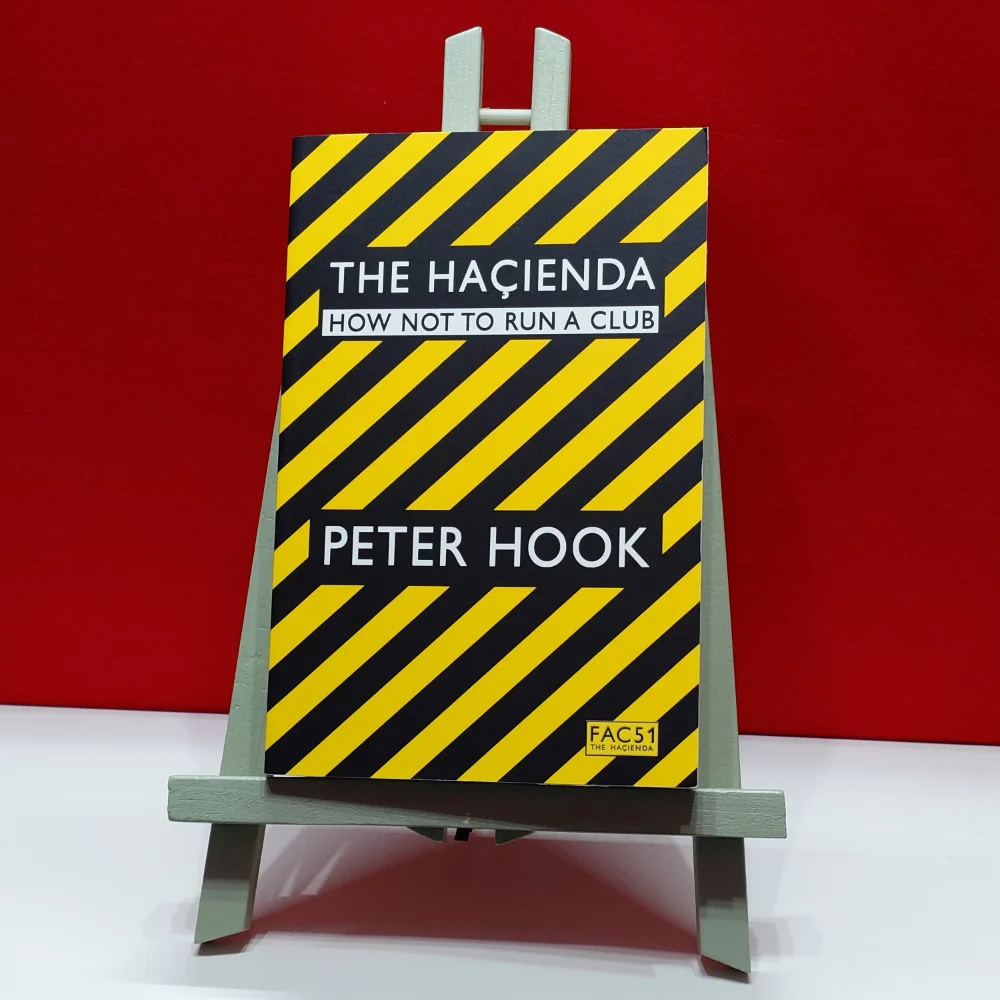
In the 1980s, Manchester became one of the hottest destinations for music. If you have a favourite music act, it’s very possible they have some association with Manchester; whether your favourite 90s boy band was Take That, you flew the flag for Oasis in the Battle of Britpop, or you were well into the Madchester scene with the Happy Mondays or the Stone Roses, there is likely some association there.
Fuelling that fire was the club scene, and among the forefront of Manchester’s clubs was the Haçienda. Located on Whitworth Street West just along the Rochdale Canal, it was an industrial-themed venue that played host to many popular acts during the early 1980s, before the development of new styles of electronic music turned the Haçienda into the venue to be at for a great night out. However, the club’s outward influence on music did not translate to financial success, and it was mostly dormant in the 1990s, eventually losing its licence, hosting its final night, and closing down in June 1997.
Peter Hook — best known as the bassist for the legendary Joy Division and New Order — was part-owner along with his fellow New Order bandmates, and in How Not to Run a Club, he recounts with considerable detail the life, death and legacy of the Haçienda, captured from the perspective of someone who was deeply involved with it from the very start.
This book being my second favourite of the year comes with a heavy caveat: this book is not a dry documentary. Instead, it reads more like a memoir that happens to cover its title subject along with Hook’s own career as bassist, DJ, club owner, and ill-advisedly, a doorman. As such, if you’re expecting a book akin to Shadowplayers, you may be disappointed.
Hook’s sense of humour comes through in the manner in which he tells a lot of the anecdotes of what happened over the years with the Haçienda, the power of hindsight working its magic to illuminate the many massive mistakes made by everyone involved with the club.
There really were a lot of decisions made in the management of the club that it’s astounding it even lasted as long as it did. There were so many highly questionable choices, such as trying to be a venue for all purposes, being hideously over-budget, having installed possibly one of the worst audio systems devised by humanity, and in particular the galaxy-brained decision to get Einstürzende Neubauten to perform there and risk bringing the entire building down.
However, there is a lot of seriousness here. Manchester in the 1980s had considerable gang problems, and the Haçienda was something of a haven for some of them; coupled with the proliferation of the drug ecstasy, a consequential death from an overdose, a heightened police presence, and the eventual loss of its venue licence, Peter Hook is occasionally flippant but ultimately sincere in his discussions on how bad things could get.
The Haçienda: How Not to Run a Club is a book that, if you’re a fan of Joy Division or New Order especially (which I am), or you have some sort of history with the Haçienda, you may want to read this book for an entertaining take on the goings-on at the time. For as great as hits like ‘Love Will Tear Us Apart’, ‘Blue Monday’, ‘True Faith’, ‘Regret’ and so on were, there was no way that was going to be enough to bankroll that place.
Day 12
🥇 The Stand by Stephen King
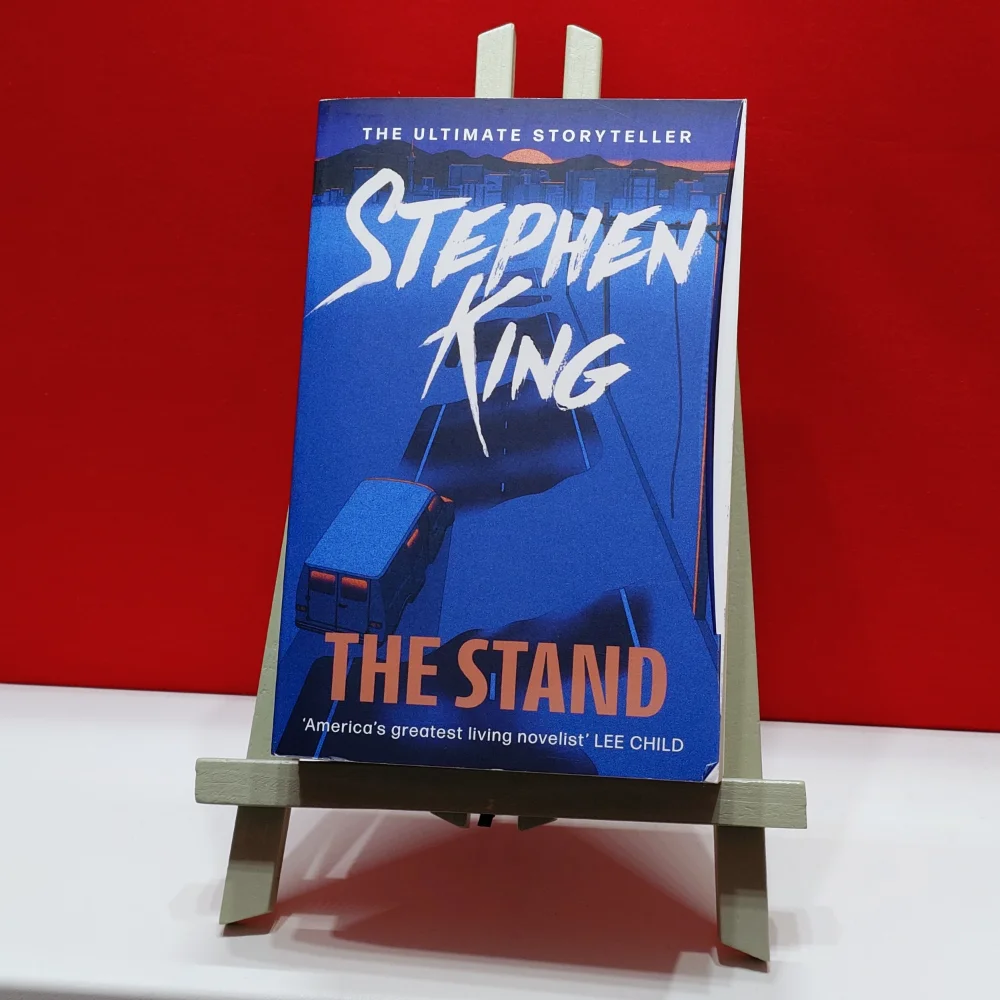
Stephen King is one of the most popular authors in the world. His career has spanned over five decades, in which he has written an entire bookshelf’s worth of material, to a point where large book retailers have a section dedicated to his works. His work has been adapted into dozens of films and TV series, perhaps most famously It, The Shining, and The Shawshank Redemption. And yet, I hadn’t really considered reading his work until I went to Manchester a year and a bit ago and, in a moment of enlightened madness, decided to pick up The Stand.
It was a book I’d heard a little bit about, and decided I would go ahead and pick a copy up. This version is the ‘uncut’ version that was initially published in 1990, a decade after the initial publication, and it is consequently north of 1,200 pages long. It was the longest book I’d read all year. It was also my favourite book I’d read all year.
The story begins with someone escaping from a military base with his wife and child, before ending up a couple days later slowly rolling towards (and eventually bumping into) a gas station. His wife and child are dead, and he is barely holding on to life, everyone visibly wracked by some virulent disease. The people at the station assist, but eventually they get infected, and things quickly begin to degrade from a combination of the disease and attempts at the US Government to suppress alarmists and protestors, and before long, the human population is reduced to a fraction of a fraction of what it was.
The Stand is split into three parts, and I have already described the first. The second part concerns itself with the steady rebuild of society from multiple perspectives in two separate camps: one in Boulder, Colorado, and the other in Las Vegas, Nevada, with the Rocky Mountains dividing them. The third part finally concerns itself with a reckoning between the two societies and the people within them.
The story is told from a third-person perspective of the numerous survivors in both camps, some of whom feature more prominently than others. There are a number of different characters, all with their different traits that make them all the more memorable — from Stu’s stoicism to Nick’s own challenges with communicating as a deaf-mute — and there are also moments where it goes on tangents that highlight just how badly things have gone. One chapter of the book is dedicated to individuals and the ways in which they end up dying, because nobody is around to help them.
A good chunk of the content of the book is dedicated to building the world in which the story takes place, with a lot of scenery being painted for you to visualise everything going on. King’s depiction of a derelict New York City feels especially ghostly, and the descriptions of environments, such as the hospital Stu leaves early on in the book and the Lincoln Tunnel that Larry traverses are vivid, thick, almost toxic.
If I had a criticism of the book, it’s that it makes me want more. I want some sort of after-story, I want to know what happened a few years later, and how much the world had changed from the start of the pandemic to then. It’s a fascinating world with interesting characters involved in an intricate plot that makes me wish for more. I wish there was more.
Above all, however, The Stand is a book that I enjoy for a lot of reasons. It tells a dark story in a brutal world with a variety of characters that interact and bounce off one another in ways that are believable. There is definitely an amount of magic here that makes the book feel fantastical in places, but it’s handled with enough tact that it doesn’t feel like contrivance. It’s a book I can suspend my disbelief in despite there being so much that is believable, and it’s honestly rare for me to be able to do that. What a book.
Honourable Mentions
The Wind-Up Bird Chronicle by Haruki Murakami
This is the first fiction work by Haruki Murakami that I actually enjoyed reading from start to finish. Wouldn’t say I love it, necessarily, as there are some rather lengthy digressions (which it seems aware of), but the core of the story was interesting, and it had the added benefit that it felt like a respectably mature story.
The City and Its Uncertain Walls by Haruki Murakami
Another Murakami book that I enjoyed. It’s a book he’d been trying to write for forty years, and the end result is a solid work that taps into Murakami’s progression and maturation as a writer. The book features a fascinating world that blends dreams and reality, and features characters a solid wealth of interesting characters. If only a few of them had actual names…
In the Miso Soup by Ryū Murakami
Now there are two Murakamis! This is a book I read pretty quickly, all things considered, and whilst I did enjoy the book, its themes and its situations, it is a book that is brutal and visceral, and it is ultimately going to be off-putting to most people. Do not read this if you are squeamish. It’s also pretty diabolical that I saw this book in the ‘Asian Tourism’ section in Waterstone’s last month.
Careless People by Sarah Wynn-Williams
This was a book that had a lot of attention due to attempts by Meta (then Facebook) at quashing it. It paints a vividly problematic picture of Facebook as a company and as a platform that is both easy to believe, yet hard to stomach. In some respects, there feels like a very limited amount of self-reflection on Sarah’s part with regards to what went on, but I suppose there’s only so much you can do with a company like Meta.
The Crying of Lot 49 by Thomas Pynchon
This was the final book I had read in 2025, and I enjoyed reading it a great deal more than I did Gravity’s Rainbow the year before. It turns out it’s a lot easier to follow a complicated narrative when the book is shorter and doesn’t require you to go full Pepe Silvia mode to understand it. It also helps that the writing doesn’t come across as anywhere near as obnoxious.
Authority by Jeff VanderMeer
Annihilation was a book I enjoyed a good bit, and this one was…not quite as good, but still had a lot going for it. The sense of terror that comes from otherworldly forces slowly invading and turning your surroundings into something both fascinating yet dangerous comes across pretty well here. God knows what Acceptance is gonna be like, though, considering its fairly mixed reception…